
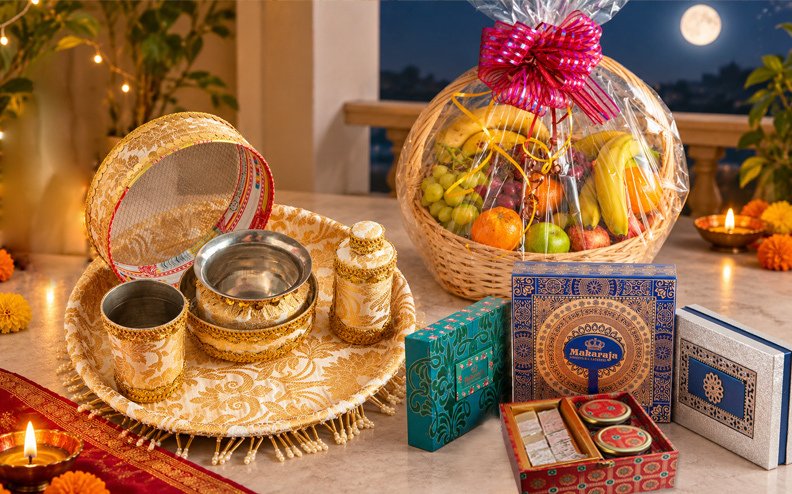
Karva Chauth 2026 falls on Thursday 29 October, and in Slough, Southall and right across Berkshire the preparations have already begun. The vrat items you need are simple enough: a sargi plate before sunrise, a puja thali with a karva, a sieve and a diya, plus sweets and a proper meal to break the fast once the moon shows its face. Get those sorted and the whole day runs smoothly.
For most families in the UK, the fast looks a little different from the one our mothers and grandmothers kept back in Punjab. Work doesn’t stop. The school run still happens. And the moon has a habit of hiding behind thick October cloud just when everyone is standing on the doorstep with a sieve in hand.
Yet the heart of the festival hasn’t changed. Married women fast from dawn until moonrise for the long life of their husbands, and in plenty of homes the husbands now fast alongside them. What turns a long, hungry day into a celebration is the gathering at the end of it: sisters, neighbours, mothers in law and friends sitting together for the katha, then food arriving from every direction.
This guide walks through every item you’ll want ready, from the first bite of sargi to the last piece of barfi, with practical tips for keeping it all manageable in a busy British week.
Here is the short version. If you only read one section, make it this one.
Karva Chauth 2026 in the UK: Thursday 29 October. Moonrise in London is expected at about 6:22pm GMT, and Slough should see it within a minute or two of that. UK clocks go back on Sunday 25 October, so double check any times you find online. Cloud and your exact location can still shift the moment you actually spot the moon, so keep a local panchang app handy on the day.
Sargi is the plate of food a woman eats before dawn, and traditionally it comes from her mother in law as a blessing for the day ahead. In late October, sunrise in Slough is around 7am, so most families eat sargi somewhere between 5am and 6am. Set an alarm. Nobody wants to wake up at 7:15 and realise the window has closed.
A good sargi plate does two jobs. It gives you slow energy for a long day, and it keeps thirst at bay for as long as possible. That second point matters more than people think, especially if you’re keeping a nirjala fast with no water at all.
Pheniyan, the fine fried vermicelli, is the classic Punjabi sargi dish. Soaked in warm sweetened milk, it’s soft, filling and gentle on an early morning stomach. Sevian kheer does the same job if pheniyan is hard to find. Alongside it you’ll usually see soaked almonds, cashews, raisins and dates, plus fruit such as banana, apple, papaya or pomegranate.
Many women add a paratha with a little butter or curd for staying power. Mathri, the crisp flaky biscuit, often sits on the plate too, and a sweet such as a coconut barfi or a besan ladoo rounds things off.
A few sensible habits make the day easier. Go light on salt and spice, because both make you thirsty by early afternoon. Skip strong tea and coffee if you can, since they dehydrate. Drink plenty of water, coconut water or milk while you still can. And if you’re pregnant, diabetic or on medication, talk to your GP before you fast. There’s no shame in keeping a gentler version of the vrat.
The puja thali is where Karva Chauth gets its look and its meaning. You can buy ready decorated thalis from shops along Slough High Street or in Southall, but plenty of women still enjoy decorating their own the weekend before.
At the centre sits the karva, a small pot with a spout, usually clay though brass and steel are common now. It’s filled with water and sometimes topped with a few grains of wheat or rice. The karva is passed around the circle during the evening puja while the katha is read, and later the water from it is offered to the moon.
Next comes the diya. A small clay lamp with ghee and a cotton wick is traditional, though many UK homes use a battery tealight for the doorstep moment, simply because the wind off the street has other ideas. Keep a box of matches in the thali anyway.
You’ll also want roli and rice grains for the tilak, a little sindoor, some flowers, a few mathris and sweets as an offering, and a picture of Karva Mata or Goddess Gauri. A lota of water, separate from the karva, is useful for the arghya to the moon.
Then there’s the channi, the sieve. After moonrise you look at the moon through it, then at your husband’s face, before he offers you your first sip of water and first bite of food. A decorated steel sieve is easy to find in Indian shops across Berkshire and Middlesex, and it’s one item worth buying a few days early because they do sell out.
A red chunni to cover the thali and a few strands of mauli thread finish the set nicely.
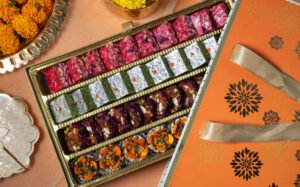
Ask anyone what they remember most about Karva Chauth and sooner or later they’ll mention the mithai. Sweets turn up at every stage of the day. There’s one on the sargi plate, a few more in the puja thali as an offering to Gauri Mata, a whole box in the baya for the mother in law, and a generous spread waiting for everyone once the fast is broken.
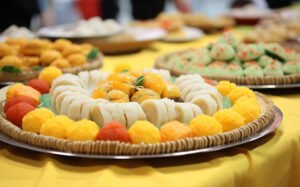
Some sweets are more traditional than others. Mathri and meethi mathri are almost compulsory. Besan ladoo and pinni are Punjabi favourites, rich with ghee and perfect for an autumn evening. Kaju katli and pista barfi travel well, which makes them ideal for gift boxes. Then there are the softer, syrupy treats like gulab jamun, rasmalai and hot jalebi that tend to disappear within minutes of the moon showing up.
For the baya, a mixed box works best. A spread of four or five varieties looks generous on the plate, keeps different tastes happy and photographs beautifully for the family WhatsApp group (let’s be honest, that’s part of it now).
Making all of this at home in the same week as a full time job is a big ask. That’s why so many local families head to Maharaja Sweets Slough for their festival boxes. Fresh mithai made the traditional way saves you hours at the stove and still tastes like something from a family kitchen.
Timing is the main thing. Sweet shops get very busy in the days before Karva Chauth, and with Diwali following on 8 November, the whole fortnight is peak season. If you’d rather skip the queue, you can Order Indian Sweets Online in Slough a few days ahead and collect your boxes when it suits you. Ordering by the weekend of 24 and 25 October gives you a comfortable margin.
Maharaja Sweets: A Taste of Home in Slough
Every festival has its familiar faces, and for a lot of families in Slough, the counter at Maharaja Sweets is one of them. It’s the kind of place where the person serving you remembers that your mother in law likes her pinni extra rich, and where the smell of fresh jalebi reaches the pavement before you’ve opened the door.
The idea behind the shop has always been simple. Indian families living in Berkshire shouldn’t have to wait for a trip back home to taste proper mithai. So the sweets are made the traditional way, with pure ghee, patient slow cooking and recipes that have been passed down rather than pulled from a factory manual. Besan ladoo, kaju katli, barfi, gulab jamun and meethi mathri all come out of the same kitchen, fresh enough for the puja thali and smart enough for a baya box.
Festivals are where the team really shows what it can do. In the weeks around Karva Chauth and Diwali, the shelves fill up with gift boxes, mixed mithai trays and seasonal specials, and families come in order for everything from a quiet evening at home to a full gathering of the street.
The shop also looks after the bigger moments in life. Many families who buy their Karva Chauth sweets here come back when a wedding is on the horizon, and alongside the mithai you’ll find a selection of wedding accessories that make it easier to prepare for the shagun, the mehndi night and the big day itself. With shaadi season following close behind the festivals, it’s handy to sort the sweets and the finishing touches in one visit.
Mostly, though, Maharaja Sweets is about the same thing Karva Chauth is about: bringing people together around something good. Whether it’s a single box for your mother in law or trays for twenty women after the katha, the aim is that every piece tastes like it came from a family kitchen, because in spirit, it did.
Get Your Karva Chauth Sorted in One Stop
The sargi is planned, the thali is ready and the mithai is on order. Now pick up the finishing touches. From decorated thalis to festive extras for the baya, browse our Karva Chauth essentials and collect everything alongside your sweets, well before the 29 October rush.
Once the moon is sighted and the arghya is offered, the husband gives his wife a sip of water and something sweet. Then comes the moment everyone has been waiting for since breakfast: dinner.
After a full day without food, it’s wise to start gently. A glass of water, a piece of fruit or a small sweet first, then a pause of ten minutes or so before the main meal. Your stomach will thank you.
The meal itself is usually proper Punjabi comfort food. Kadhi chawal is a firm favourite. So are dal makhani, shahi paneer, chole with puri or bhature, aloo gobi, and fresh rotis with a dollop of butter. Some families keep the evening food sattvic, without onion and garlic, so it’s worth asking before you plan the menu for a group.
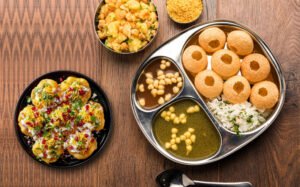
Here’s the honest truth though. The woman who has fasted all day is often the same person expected to cook this feast, and that hardly seems fair. More and more households now hand dinner over to a good Indian Food Takeaway so everyone can actually sit down together. If you’re after rich, homely flavours rather than restaurant style curries, look for the Best Punjabi Takeaway in Slough, the kind of food that tastes like it came from your own mother’s kitchen.
Hosting a larger group changes the maths. When six or eight women from the street or the gurdwara gather in one living room for the katha, feeding everyone afterwards is a real job. Deciding between Takeaway or Catering usually comes down to numbers: a takeaway order covers a family dinner easily, while a gathering of twenty or more is far easier with caterers handling the food, serving and clearing up. For bigger community events, the same Party & Wedding Catering services that families trust for shaadis and birthdays can turn a Karva Chauth evening into a proper occasion without anyone spending the night in the kitchen.
Karva Chauth lands on a Thursday this year, which means most of us will be fasting through a normal working day. A little planning goes a long way.
Start with the evening before. Wednesday 28 October is the natural night for mehndi, laying out your outfit and prepping the sargi so it only needs warming at 5am. If your mother in law lives further away, arrange for the sargi to be dropped round on Wednesday evening or ask her to send the ingredients so you can put the plate together yourself.
At work, a quiet word with your manager helps. You don’t need to explain every detail, just that you’re fasting and may want to leave a little early to get home before moonrise. Many UK employers are happy to be flexible for religious observance, and plenty of colleagues will be curious rather than puzzled.
In many parts of England, the October half term overlaps with this week, so check your school calendar. If the kids are home, get them involved. Children love decorating the thali, and it’s a lovely way to pass on the tradition.
Finally, plan for clouds. British skies in late October are not famous for clear views. If the moon stays hidden, many families break the fast at the published moonrise time, or after seeing the moon on a live stream or a relative’s video call from a clearer part of the country. Agree on your family’s approach before the evening, not while everyone is hungry and debating on the doorstep.
Karva Chauth asks a lot of the women who keep it. A long day without food or water, a full schedule that doesn’t pause for festivals, and a sky that rarely cooperates. What makes it worth every hungry hour is the togetherness at the end: the circle of women passing the karva, the husband holding the sieve a little nervously, the first sweet tasting better than any sweet all year.
So sort your sargi the night before, decorate the thali with the kids, book your mithai early and let someone else handle the cooking for once. Then, on Thursday evening, step outside, look up, and enjoy the moment you’ve waited all day for.
Same day pickup or festival pre orders, straight from our Slough kitchen.
FAQ
Karva Chauth 2026 is on Thursday 29 October in the UK, the same day as in India. Moonrise in London is expected around 6:22pm GMT, and Slough will be almost identical.
Choose foods that release energy slowly and won’t make you thirsty. Pheniyan in milk, soaked almonds, dates, fresh fruit, a paratha and a small sweet make a balanced plate. Keep salt and spice low.
Mathri and meethi mathri are the classics. Besan ladoo, pinni, kaju katli, barfi, gulab jamun and jalebi are all popular, both for the puja offering and for the baya given to the mother in law.
A baya usually holds sweets, mathri, dry fruits, a saree or suit, and sometimes a little cash or jewellery. It’s given by the daughter in law to her mother in law as a mark of respect.
Yes. Many husbands now fast alongside their wives, and unmarried women often keep the vrat hoping for a good partner. Unmarried women traditionally break the fast after seeing the stars rather than the moon.
Most families either break the fast at the published moonrise time or after seeing the moon via a live stream or a video call. Decide on your approach in advance.
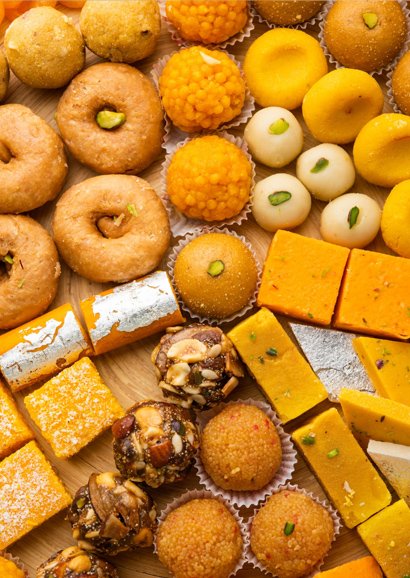
Enjoy handcrafted Indian sweets made with premium ingredients and authentic recipes. Place your order online and pick up your favourites at your convenience.