
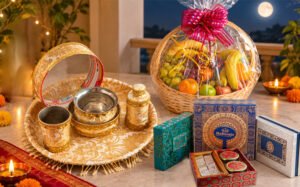
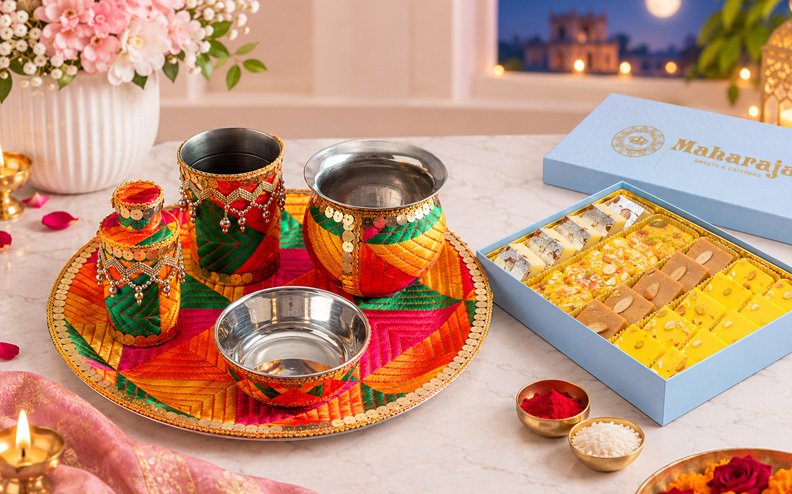
A Karva Chauth puja thali holds a clay or metal karwa filled with water, a diya, roli and rice, sindoor, a sieve (channi), mathri, fruit, dry fruits and a few traditional sweets. Most families also add a small idol or picture of Mata Gauri, a red chunni, bangles and some money for the elder who receives the baya. That is the short answer. The rest of this guide explains why each item matters and where to find everything if you live in the UK.
In 2026, Karva Chauth falls on Thursday 29 October. For women across Slough, Southall, Hounslow and the wider Berkshire area, that means a full working day of fasting, an evening katha with friends or family, and then the long wait for the moon to show itself through the British clouds. Anyone who has stood in a back garden in late October knows the moon here can be shy. Check your local moonrise time on the day and keep a phone app ready.
Getting the thali right is half the joy of the festival. It is the one object every woman carries to the puja circle, passes around during the feris, and holds up to the moon at the end of the day. A well prepared thali also takes pressure off the evening, because you are not running to the kitchen for a forgotten diya while everyone else is already seated.
We have put this guide together from years of helping local families prepare for the fast at our counter in Slough, and from the questions customers ask us every October.
Every region and every family does things a little differently. A Punjabi household in Slough may follow the customs a grandmother brought from Jalandhar, while a family from Rajasthan or Uttar Pradesh will have its own small changes. The items below are the ones we see on almost every thali.
The karwa is a small clay pot with a spout, and the festival takes its name from it. It is filled with water, sometimes with a little milk or a few grains of rice, and covered with a lid. During the puja the karwa is exchanged between women in the circle. At moonrise, the water from it is offered to the moon as arghya. Many families now use a decorated steel or brass karwa because clay can be hard to find in the UK, and either is perfectly acceptable.
A small diya with ghee and a cotton wick stays lit through the katha and again at the moon puja. Keep a spare wick and a box of matches on the thali. Draughty halls and gardens put out more diyas than you would expect.
The sieve is the item people remember most from Bollywood films, and for good reason. After sighting the moon, a woman looks at it through the channi and then at her husband’s face through the same sieve. Plain steel sieves work fine, though decorated ones with gota and mirror work look lovely in photographs.
Roli (red kumkum) and chawal (unbroken rice) are used for the tilak during the puja. Sindoor is applied as a symbol of marriage. Keep each in its own small katori so nothing spills into the sweets.
The puja is dedicated to Goddess Parvati, often worshipped as Gauri Mata, along with Lord Shiva and Lord Ganesha. Some women shape a small Gauri from clay or cow dung, as their mothers did. Most UK families use a printed Karva Chauth calendar or a small framed picture.
A red or maroon chunni, glass bangles, bindi, mehndi, kajal and alta all belong to the solah shringar, the sixteen adornments of a married woman. You do not need all sixteen on the thali, but bangles and a chunni are usually included, and many women place a small makeup set there for the baya. If you want something more festive, our accessories range has decorated items that suit the occasion well.
A few pieces of fruit, a handful of almonds and cashews, and a glass of water sit on the thali for breaking the fast. The first sip of water after a full day without it is something every woman who keeps this fast remembers.
The baya is a gift for the mother in law or an elder woman of the family. It usually holds clothes, a little money, mathri, sweets and dry fruits. In Punjabi families the baya is placed beside the thali during the katha and handed over with a touch of the elder’s feet afterwards.
If you would rather not gather every piece separately, ready made sets of Karva Chauth Vrat Items are available in Slough, which saves a lot of running between shops in the week before the fast.
Sweets appear twice on Karva Chauth: once at sargi before dawn, and again on the thali and in the baya in the evening. Picking the right ones makes a real difference to how the day feels.
Sargi is the meal a mother in law gives her daughter in law to eat before sunrise on the day of the fast. In the UK, that means waking at around 5am in late October. A good sargi plate keeps you going for many hours, so it mixes slow energy foods with something sweet. Typical items include pheniyan or seviyan cooked in milk, parathas, dry fruits, coconut, fruit, mathri and a few pieces of mithai. Many women also drink a glass of coconut water or milk to stay hydrated.
One practical tip from our customers: eat the salty items like mathri early in the sargi and finish with fruit and water. Too much salt right before a long fast makes the thirst harder in the afternoon.
The sweets on the thali are offered during the puja and shared afterwards. These are the ones families in Slough ask us for most often.
Mathri. Strictly speaking, mathri is a savoury flaky biscuit, but it is so central to the festival that it belongs on any list. Both plain and sweet mathri are placed on the thali and in the baya.
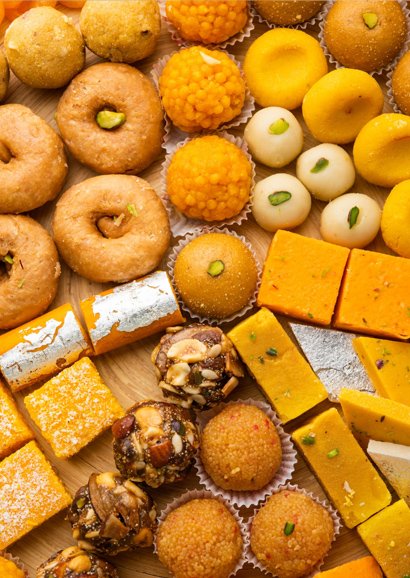
Besan Ladoo. Made from roasted gram flour, ghee and sugar, besan ladoo is the classic Punjabi choice. It keeps well for several days, which suits families who prepare the baya early.
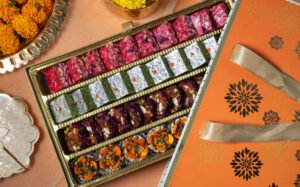
Kaju Katli. Smooth, thin diamonds of cashew fudge, often finished with silver varq. Kaju katli travels well and looks elegant in a gift box.
Barfi. Plain milk barfi, pista barfi and coconut barfi are all popular. Milk based sweets are traditionally linked with purity and are a common offering at Hindu pujas.
Gulab Jamun and Rasgulla. These are usually served after the fast rather than placed on the thali, because the syrup makes the plate messy. Many families keep a tin ready for the evening meal.
Pheniyan. Fine fried vermicelli, cooked in sweetened milk for sargi. It is light, filling and very traditional in North Indian homes.
At Maharaja Sweets we make our mithai fresh in the run up to Karva Chauth and Diwali, and we would always rather customers order a day or two ahead than find the trays empty on the morning of the fast. If you are short on time, you can Order Indian Sweets Online in Slough and collect a boxed selection on your way home from work.
After the moon puja, the husband offers his wife her first sip of water and the first bite of something sweet. Dinner follows, and it is usually a proper feast: dal makhani, paneer, puri or naan, kheer and plenty of mithai. Plenty of women understandably do not want to cook after a whole day without food or water, so a lot of families plan the dinner around an indian Food takeaway in slough instead.
Twenty years ago, finding a clay karwa in Berkshire meant asking a relative to post one from India. Things are much easier now. Slough has a large Punjabi and wider South Asian community, and the shops along Farnham Road, Stoke Road and the High Street stock most puja items from early October.
Here is a simple plan that works for most families.
For larger gatherings, where several sisters, cousins and neighbours keep the fast together and break it with one big meal, it is worth thinking about Takeaway or Catering so nobody spends the evening in the kitchen. Community halls and gurdwara groups often arrange a shared katha and dinner, and our Party & Wedding Catering services cover events of that size, from a few dozen guests to several hundred.
If you would simply like to sit down and be served after the fast, a trip to a Punjab restaurant slough families already know and trust is a lovely way to end the day. Just remember that Karva Chauth evening is one of the busiest of the year for Indian restaurants in Slough, so ring ahead.
Outside Slough, Southall Broadway, Wembley’s Ealing Road, Leicester’s Belgrave Road and Birmingham’s Soho Road all have good puja shops. If you live somewhere without a local Indian grocer, most thali items can be ordered online, though clay karwas sometimes arrive cracked, so a metal one is the safer choice for delivery.
A Karva Chauth thali does not need to be expensive or elaborate. It needs a karwa, a diya, a sieve, roli and rice, a few sweets and a little care. Everything else is personal: the chunni your mother gave you, the bangles from your wedding, the ladoo recipe your nani swore by.
If you start a week early, buy the fixed items first and leave the fresh sweets until the last two days, the morning of the fast will feel calm rather than rushed. And when the moon finally appears over Slough, you will have everything you need right there on the plate.
Wishing every woman keeping the vrat this year a peaceful fast and a happy, healthy marriage. Karva Chauth di lakh lakh vadhaiyan.
Same day pickup or festival pre orders, straight from our Slough kitchen.
FAQ
Karva Chauth 2026 falls on Thursday 29 October. The fast runs from sunrise until the moon is sighted in the evening. UK clocks go back a few days earlier, so moonrise in Slough and London should come in the evening, roughly between 7pm and 8pm, but check a local panchang or moon app on the day, as the exact time shifts by location.
Yes. Clay is traditional, but steel, brass and copper karwas are widely used in the UK and are just as acceptable for the puja. A metal karwa can also be cleaned and used again next year.
Mathri, besan ladoo, kaju katli and plain milk barfi are the most common. Choose dry sweets for the thali itself and keep syrupy ones like gulab jamun for after the fast.
A traditional baya includes a suit or saree, a little money, mathri, mithai, dry fruits and sometimes a shringar set. The exact contents vary by family, so it is worth asking an elder what your household usually gives.
This happens often in the UK. Most families wait a reasonable time and then break the fast once the moonrise time has passed, offering arghya in the direction of the moon. Some follow a live moon sighting from India or another city. Follow whatever your family and priest consider right.
Many women adapt the fast by drinking water or eating fruit during the day. If you are pregnant, diabetic or on regular medication, speak to your GP before fasting. The spirit of the festival matters far more than going without water.
Enjoy handcrafted Indian sweets made with premium ingredients and authentic recipes. Place your order online and pick up your favourites at your convenience.