

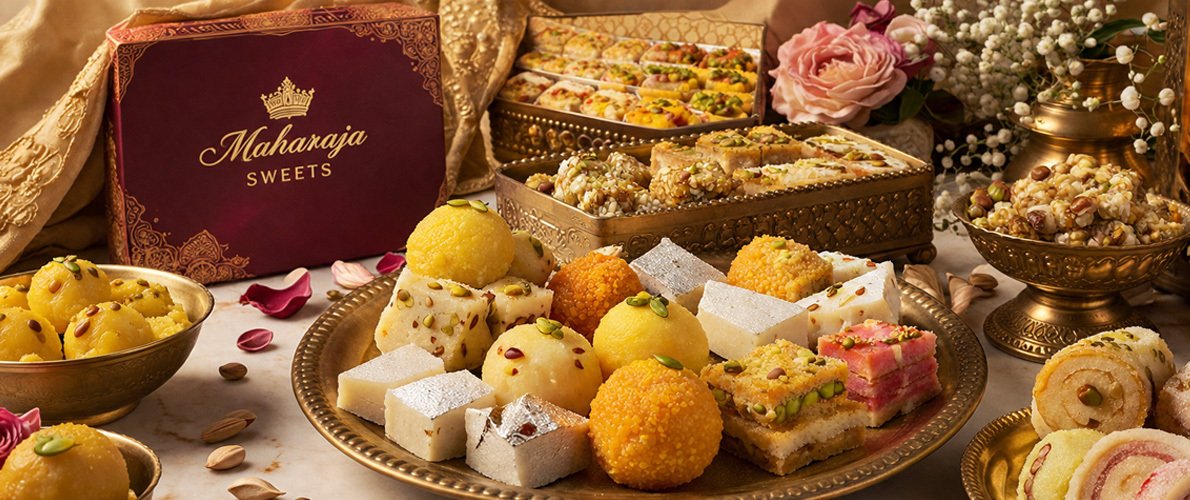
Guru Nanak Jayanti 2026 falls on Tuesday 24 November 2026, the full moon of Kartik. It marks the 557th birth anniversary of Guru Nanak Dev Ji, the founder of Sikhism and the first of the ten Sikh Gurus. Because the date lands midweek this year, many gurdwaras across the UK will hold their main kirtan programme and langar on the nearest weekend, so check with your local gurdwara before you make plans.
If you grew up in a Punjabi household, you already know that Gurpurab smells of ghee, cardamom and slow cooked dal. The day begins before sunrise with prayers and hymns, and it rarely ends without a plate of something warm and a box of mithai being passed around the room. Food is not a side note to this festival. It sits right at the centre of it, because sharing a meal is one of the clearest ways Sikhs live out the teachings of Guru Nanak.
This guide walks you through what the day means, how families in Britain celebrate it, and which traditional Punjabi dishes and Indian sweets belong on your table. If you are hosting relatives in Berkshire or simply want a proper festive spread without spending two days in the kitchen, you will also find practical ideas for ordering locally, including from Maharaja Sweets in Slough.
Guru Nanak Jayanti, also called Gurpurab or Prakash Purab, celebrates the birth of Guru Nanak Dev Ji in 1469 at Rai Bhoi di Talwandi, now known as Nankana Sahib in present day Pakistan. The word Prakash means light, and the festival honours the light his teachings brought into the world.
Guru Nanak spent much of his life travelling on foot across South Asia and beyond, talking with people of every faith and background. His message was simple and, for its time, quite radical. He taught that there is one God, that every person is equal regardless of caste, gender or wealth, and that a good life rests on three daily practices:
That third principle explains why food plays such a large role in the celebrations. Sharing a meal is not just hospitality in Sikh tradition. It is an act of faith, and it turns every Gurpurab kitchen into a small expression of the Guru’s teaching.
The UK is home to one of the largest Sikh communities outside India, and Gurpurab is felt strongly in places like Southall, Slough, Hounslow, Birmingham, Leicester and Wolverhampton. Celebrations usually stretch across three days rather than one.
Akhand Path. Two days before Gurpurab, gurdwaras begin an unbroken reading of the Sri Guru Granth Sahib from start to finish. It takes around 48 hours, with readers taking turns through the night, and it concludes on the morning of the festival.
Prabhat Pheris. In the weeks before the day, small groups gather early in the morning and walk through the neighbourhood singing shabads. In Britain these tend to be gentler, more local affairs, often ending at someone’s home with tea and a few sweets.
Nagar Kirtan. On the weekend nearest Gurpurab, many towns hold a procession led by the Panj Pyare, the five beloved ones, with the Guru Granth Sahib carried on a decorated float. Families line the route, and local households and businesses set up stalls handing out free food and drinks to anyone passing.
Kirtan and Ardas. On the day itself, the gurdwara fills with hymns, talks on the Guru’s life and the Ardas prayer. Afterwards, everyone receives karah prasad, a warm sweet offering made from wholewheat flour, sugar and ghee.
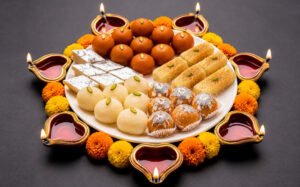
At home, families light diyas and candles in the evening, call relatives they have not seen for a while, and sit down to a festive meal. That meal is where the rest of this guide comes in.
The answer lies in langar, the free community kitchen that Guru Nanak started more than five centuries ago. In every gurdwara, anyone can sit down and eat, whatever their religion, background or bank balance. People sit together on the floor in rows, called pangat, as a deliberate statement that nobody is above anybody else.
There is a well loved story that captures the spirit behind it. As a young man, Guru Nanak was given money by his father to make a profitable trade. Instead, he spent it feeding a group of hungry holy men, and called it the truest bargain he could have struck. That idea, known as Sacha Sauda, still shapes how Sikhs think about food today.
Langar food is always vegetarian and simple: dal, a seasonal sabzi, rotis, rice, and often kheer or another sweet. It is cooked and served by volunteers as sewa, selfless service. On Gurpurab, gurdwaras in the UK may feed thousands of visitors in a single day.
This is why a Gurpurab meal at home tends to follow the same spirit. It is generous, vegetarian, made for sharing, and there is always enough for one more guest. Even when families lean on a local Indian Food Takeaway to help on a busy festival day, the food is still shared with that same generosity.
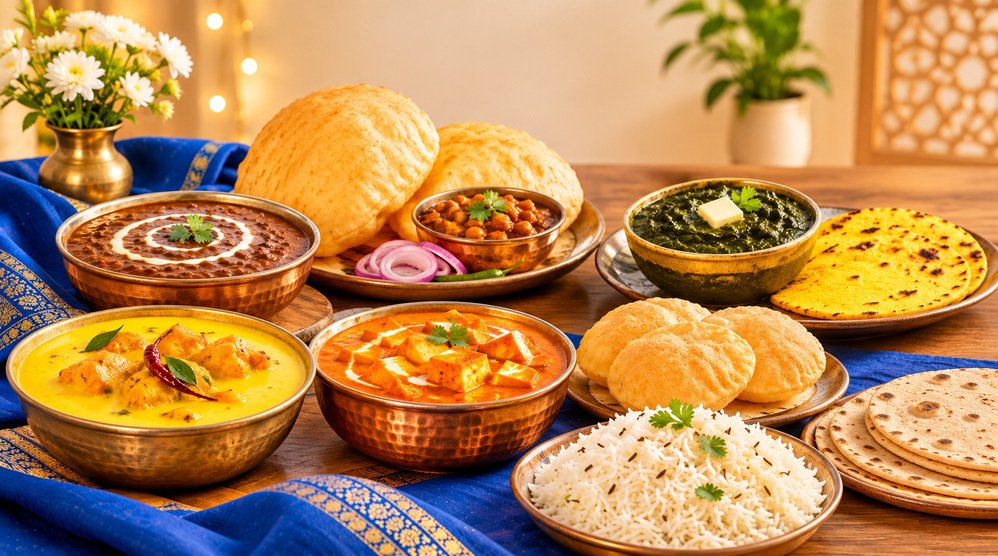
The best Gurpurab menus keep things vegetarian, hearty and comforting. These are the dishes most Punjabi families reach for in November.
Dal Makhani. Whole black urad dal and kidney beans, simmered for hours with butter and a little cream. It is rich, smoky and the closest thing to a hug in a bowl. Most families agree it tastes even better the next day.
Chole Bhature. Spiced chickpeas cooked with tea leaves for a deep colour, served with puffed, golden bhature. It is a festive breakfast favourite and the dish children ask for first.
Sarson da Saag and Makki di Roti. Mustard greens are slowly cooked with spinach and bathua, finished with a spoon of white butter and served with cornmeal flatbread. November is the start of the season for fresh mustard greens, which makes this a natural Gurpurab choice.
Kadhi Pakora. Gram flour fritters in a tangy yoghurt curry, tempered with cumin, fenugreek and dried red chillies. Serve it with plain basmati rice.
Shahi Paneer or Mattar Paneer. Soft paneer in a creamy tomato and cashew gravy, or a lighter version with green peas. A paneer dish turns an everyday meal into a celebration.
Aloo Puri. Spiced potato curry with small, crisp puris. Simple, quick and loved by every generation at the table.
Jeera Rice and Fresh Rotis. Every Punjabi meal needs a good base. Lightly spiced cumin rice and warm wholewheat rotis keep everything balanced.
Add raita, a fresh salad of onion and cucumber, and a jar of homemade achar, and you have a meal worthy of the day. If cooking all of this feels like too much alongside gurdwara visits and family duties, a good Punjabi Food Takeaway in Slough can bring the same flavours to your table with none of the stress.
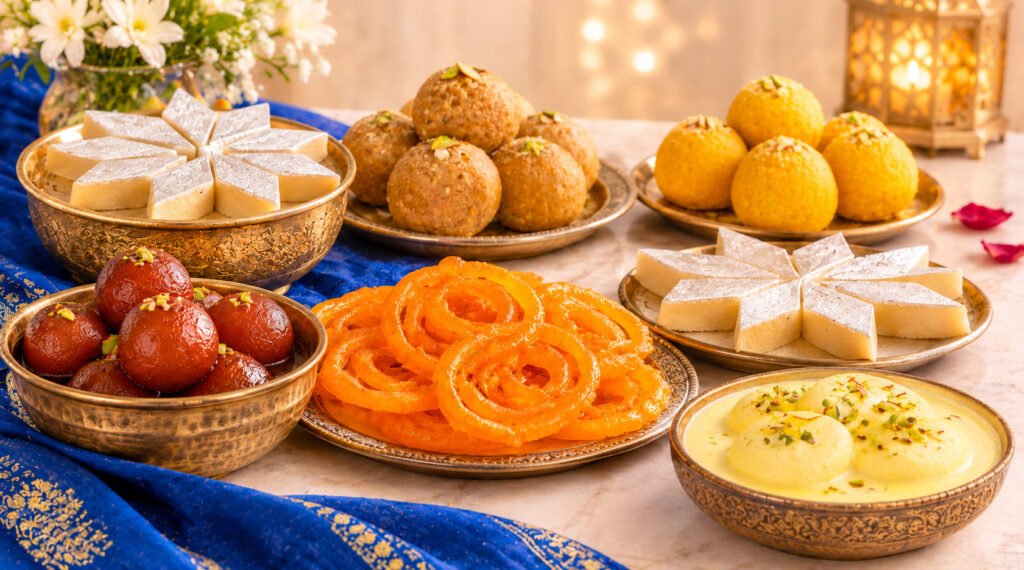
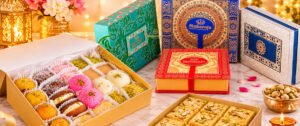
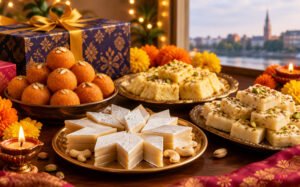
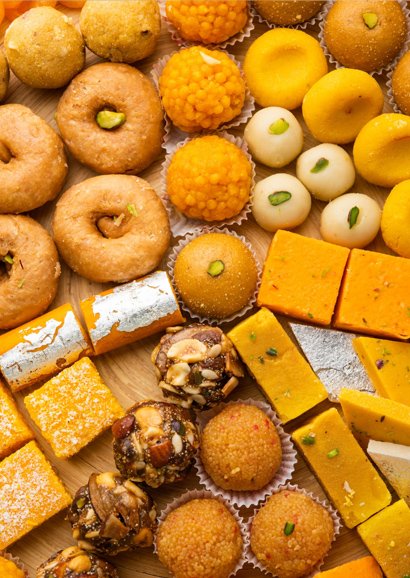
No Punjabi celebration feels complete without mithai. Sweets are shared with neighbours, taken to the gurdwara, packed into gift boxes for relatives and offered to every guest who walks through the door. Here are the favourites for Guru Nanak Jayanti.
Karah Prasad
Karah Prasad is the most sacred sweet of the day, made with equal parts wholewheat flour, sugar and ghee. It is prepared in the gurdwara with prayer and handed out to everyone after Ardas. Many families also make a small batch at home.
Pinni
Pinni is a true Punjabi winter sweet made from roasted wholewheat flour, ghee, jaggery and nuts. Grandmothers swear by it for keeping warm through cold British evenings.
Besan Ladoo
Besan Ladoo gram flour is roasted slowly in ghee until it smells nutty, then rolled with sugar and cardamom. They keep well for a week and travel easily, which makes them ideal for gifting.
Gulab Jamun
Gulab Jamun is soft milk dumplings soaked in rose and cardamom syrup. Serve them warm with a scoop of vanilla ice cream for a little British twist.
Jalebi
Jalebi is the most crisp spirals of batter soaked in saffron syrup. Hot jalebi with a glass of milk is a classic Punjabi breakfast treat on festival mornings.
Kaju Katli
Kaju katli are thin diamonds of cashew fudge, often finished with edible silver leaf. Elegant, rich and almost always the first box to empty.
Gajar ka Halwa
Gajar ka Halwa: Grated carrots slowly cooked in milk, ghee and sugar, topped with almonds and pistachios. November is the perfect carrot season, so this one tastes its very best around Gurpurab.
Rasmalai
Rasmalai is soft cheese patties soaked in chilled saffron milk and topped with chopped pistachios. Light, delicate and a lovely way to end a rich festive meal.
Barfi
Barfi is dense milk fudge cut into neat squares, made in flavours like pista, coconut and chocolate. It keeps well for a few days, which makes it a favourite for gift boxes and sharing at the gurdwara.
The secret to good mithai is freshness. Sweets made with milk, khoya and ghee lose their texture quickly, so buy them as close to the day as you can. If you live locally, it is worth knowing where to find Fresh Indian Mithai in Slough made in small batches rather than sitting on a shelf for weeks.
Hosting on Gurpurab often means feeding far more people than you planned for. A few simple steps keep the day calm.
For larger family gatherings, an akhand path at home or a community function, it makes sense to look at Indian food takeaway for events rather than trying to cook for fifty people in a domestic kitchen. You get proper Punjabi food in party sized portions and more time with your family.
If you would rather skip the queues altogether, order your sweets ahead and collect a ready packed box on the day. Assorted mithai boxes also make thoughtful gifts for neighbours, colleagues and friends who want to share in the celebration.
Whether you need a few boxes of ladoo or a full spread for the whole extended family, a trusted kitchen close to home takes the pressure off and lets you focus on what the day is really about.
Guru Nanak Jayanti is a day for prayer, gratitude and togetherness, and food is how many families turn those values into something you can taste. A pot of dal shared with neighbours, a tray of pinni for the gurdwara, a box of ladoo for the colleague who has never celebrated before: each one is a small act of Vand Chakna.
So this 24 November, light the diyas, listen to the kirtan, and gather the people you love around a table full of Punjabi food and Indian sweets. Whether you cook every dish yourself or lean on a trusted local kitchen, what matters most is that nobody leaves hungry and everybody feels welcome.
Wishing you and your family a peaceful and joyful Gurpurab. Waheguru Ji Ka Khalsa, Waheguru Ji Ki Fateh.